Showing posts with label Cherokee. Show all posts

16 May 2026

NATIONAL ARCHIVES OF THE UNITED STATES : DAWES ROLLS : 1896 APPLICATIONS AND THE CURTIS ACT : APPLICATIONS TAKEN 1898 - 1907

ARCHIVES GOV RESEARCH DAWES ROLLS 

Excerpt: The National Archives and Records Administration (NARA) has custody of the Final Rolls of the Five Civilized Tribes, known as the Final Dawes Rolls, as well as related census cards, enrollment applications, land allotment jackets, and maps. These records are found in Record Group 48, Records of the Office of the Secretary of the Interior, and in Record Group 75, Records of the Bureau of Indian Affairs.

The Final Dawes Rolls and related records are some of the most heavily used records at NARA for researching membership in the Cherokee, Choctaw, Chickasaw, Creek, and Seminole Nations in Indian Territory (present-day Oklahoma).

Note that these tribes were originally exempted but did end up being counted, and it's controversial.

Excerpt: Then, in 1895, Congress authorized a survey of Indian Territory, and in 1896 Congress authorized the Dawes Commission to add names to existing tribal rolls as a preliminary step to allotment. The Commission received more than 7,500 applications for enrollment and traveled throughout Indian Territory conducting hearings.

These applications, known as the 1896 Applications, were declared null and void two years later, when Congress passed an act on June 28, 1898, authorizing the Commission to proceed with enrollment and allotment for the Five Civilized Tribes without tribal consent. The 1898 act, known as the Curtis Act, also provided for the termination of the Five Civilized Tribes’ tribal governments. By 1902, each of the Five Tribes had negotiated and ratified an agreement that modified the terms of the Curtis Act and became the basis for enrollment and allotment.

With new guidelines in place, the Dawes Commission accepted enrollment applications from 1898 through 1907, with a handful accepted in 1914.

29 April 2026

CHEROKEE : THE 1833 BEGINNINGS OF THE DAWES ROLLS : CRIMINAL WHITE SQUATTERS and the INDIAN PROBLEM : INCOMING SETTLERS THREATENED TRIBAL OWNERSHIP OF LAND

What a book this is!  I'm so glad author Aaron Kushner did not give into political correctness (as it is today) or go sentimental on us as he reported the complications of Cherokee Nation Citizenship.  So very many Americans are today seeking the truth of their ancestry and family history and many of them have heard they have some tribal ancestry as well. I would say that the Cherokee may be the most famous of all the tribes.

Excerpt page 107 -
"In 1883 a group of Eastern humanitarians, led by Senator Henry L. Dawes, began meeting regularly to discuss the "Indian problem."  They observed the influx of white settlers into Indian Territory and the lack of stable law enforcement therein; since the Cherokee Nation and other tribal nations could not prosecute crimes where an American was involved, lawlessness spread like wildfire, especially among white squatters."

Excerpt page 108 - William Ross was the leader of the Cherokee at that time.

"William Ross argued that their system (of communal tenure) created no "landless paupers" or "absent landlords" to brutally eject them; the Cherokee had among them poverty but not starvation.


By 1890 the white settlers were outnumbering the Cherokee and they wanted to acquire property. 


Excerpt page 110 -

"Undeterred by the Cherokee Nation or the half-hearted attempts made by the United States to escort them out, non-citizen whites continued to pour into the Nation. The most dangerous of these were those who advanced "some fantastic claim to citizenship, and who loudly demanded every privilege enjoyed by the Indians" despite tribal authorities repeatedly denying them access. Cherokee leaders soon found themselves operating a minority government in their own territory.  The United States census of Indian Territory of 1890 listed 56,309 inhabitants in the Cherokee Nation. 29,166 were coded white. 5,127 were coded Black, and 22,015 were coded Indian.

Excerpt page 111 -

"Up until 1887, Cherokee leaders had successfully resisted American pressures for allotment and territorial assimilation.  In 1887, Congress passed the General Allotment Act, better known as the Dawes Act, to turn the I*Indians into private land holders,.  By allotting land to individual in tribal nations, the thinking went, the total lands allotted would not equal the total acreage held in common by the tribes, the remainder would be left for white settlers and corporations to consume.  The Dawes act, however, did not app;ly to the Cherokees, Choctaws, Creeks,m= Chickasaws, or Seminoles because of prior Treaty agreements. Nevertheless, the writing was on the wall."  (These were the Five Civilized Tribes.)

C 2026 Ancestry Worship - Genealogy
All Rights Reserved including Internet and International Rights 

21 May 2025

THE INDIAN CARD : OTHER CRITERIA FOR TRIBAL ENROLLMENT? DNA TESTS?

THE INDIAN CARD by CARRIE LOWRY SCHUETTPELZ

Excerpt page 24 : In addition to lineage and blood quantum, some Tribes add other criteria to the mix.  Some have requirements around culture and tradition - my own Tribe, the Lumbee, for example, now requires completion of that Lumbee history class before someone can enroll. A handful of Tribes take into consideration which side of your family your Native ancestry is on. Some Tribes require applicants to enroll within a certain period after their birth.  Some maintain a residency requirement: the applicant must have been born or currently reside on the Tribe's lands.

... In recent years, and with the advent of consumer ancestry tests, a misconception has emerged that DNA spit tests can be used to gain Tribal enrollment.  That's not quite true.  No federally recognized Tribe in the United States allows someone to apply for enrollment using just their 23andMe report. Tribes that use DNA tests in their enrollment processes generally do so for maternity or paternity purposes - that is, to determine a person's biological parentage.

(For people were not born in or residing in their Tribal Community. (I note, in common language, "on the reservation" do an enrollment application.) ... Usually an extensive family tree must be filled out usually, historical birth certificates of ancestors must be submitted. Often the process must be completed in person. ...

Excerpt page 25 : ... One of the biggest obstacles people face with Tribal enrollment is verifying their ancestry. It is generally the case that Tribes don't release their historical rolls to the public. Certainly, from a sovereignty perspective, this makes sense. After all, the U.S. government doesn't maintain a public-facing list of all its current citizens. I can think of  a hundred reasons this sort of public cataloguing would be problematic. The same goes for Tribes.


Lesson: For Native American Tribes, citizenship is never geographical.  It's always relational.

PUBLIC NATIVE AMERICAN ROLES (Commonly called THE FIVE CIVILIZED TRIBES)
Cherokee Nation
Chickasaw Nation
Seminole of Oklahoma
Choctow of Oklahoma
Muscokee (Creek) Nation

According to an expert of the Chickasaw Nation, the further from these roles (called The Dawes Rolls) they get, the harder it is to prove Native Tribal affiliation.... And some people with common names erroneously "prove" they are not

Notes:  Author Carrie Lowry Schuettpelz also discusses the founding of the United States census and the evolution of questions asked. Until the 1850 census race was not asked. She explores the question of dismissiveness and also racism. She brings up the Nazi's and extermination of a people, her visit to the Holocaust Museum in Washington, dealing with National Archives and Record Administration.  She explores treaties and agreements between tribes and government and also individuals.  

Again, I highly recommend this book for anyone interested in the history or the genealogy!

C 2025  Ancestry Worship - Genealogy BlogSpot
Book Review and Excerpt selections
All Rights reserved including Internet and International Rights


07 May 2025

THE INDIAN CARD by CARRIE LOWRY SCHUETTPELZ : ANCESTRY WORSHIP BLOGSPOT BOOK REVIEW (AND A LIST OF TRIBES MENTIONED IN THE BOOK)

THE INDIAN CARD by CARRIE LOWRY SCHUETTPELZ

In this blog I sometimes post about Native American as well as African-American research as UNITED STATES OF AMERICA / AMERICAN research. From the hits I get on posts about Native American ancestry, I know that some of my readers are interested in making a claim to be considered "a member of the tribe." But I may have said this before; I have never gotten cooperation from the few tribes I've contacted, hoping that someone on that side would help a client become a member of the tribe. In the years since, as the Internet grew, more tribes have websites that provide information on what they consider and how they process enrollment, which is helpful. I've heard various "reasons why" some tribes are not helpful, including that those who have rights to money from casinos do not want to further share it. I'm always interested in what the processes to claim tribal membership might be.

The Indian Card, subtitled Who Gets To Be Native American, is a book about tribal enrollment from the perspective of a woman who is part of the Lumbee tribe in North Carolina. Carrie Lowry Schuettpelz has other heritages, but she focused on claiming the Native American aspect of her ancestry. Her mother had enrolled her when she was six. She was not raised to feel a part of that tribe, living over a thousand miles from where the Lumbee tribe is headquartered, but the card would be back in her hands years later after testing and reenrollment. In this book, she wrote about her personal experience as well as the frustrations of the attempt to collect information that might be valuable to anyone who wishes to do the same. 

In this book author Carrie Lowry Schuettpelz brings up the different ways that Tribes consider people for membership, the questions asked by the United States Census, the Dawes Rolls, and much more. 

You will find the following tribes mentioned - some detailed information, some just a note.

The Lumbee, Cherokee,  Navaho, Meskwaki, Oneida, Apache, Blackfeet, Checotah, United Keetoowah-Cherokee, Chickasaw, Chippewa, Choctaw, Creek, Dakota, Seminole, Hopi, Iroquois, Kalona, Lakota, Lenape, Mohawks, Muscogee (Creek),Naticoke, Nooksack, Ojibwe, Quechan, Seneca, Seminole, Shawnee, Sioux, Tohono O'odham, Tulalip, Tuscarora, Wyandot, Wyandotte....

I highly recommend this book, which was so well written and thought out - so informative. For the purposes of Ancestry Worship - Genealogy BlogSpot, I will excerpt information that will be especially interesting to my readers in the next few posts.


THE GROWING NUMBER OF AMERICANS WHO REPORT BEING NATIVE AMERICAN ON UNITED STATES CENSUS

Excerpt  Introduction : If you, like me, track the results of the U.S. Census because nothing in this cold world makes sense except the hard facts of multivariate data analysis, you've seen it, too: the population of people in this country who self--identify as Native has exploded.

According to the 2000 U.S. Census, about 4.1 million people checked the Indian box, a term I use to describe the carousel of options that have appeared for Native Americans and Alaska Natives. By 2010, that number had increased to 5.2 million.  And in 2020. 9.7 million people - more than twice the 2000 county - self-identified as Native.

Certainly, there have been a few changes to the way we count. In 2000, for example, for the first time in census history, people could check more than one box for race. So, if we assume that people were previously choosing between their racial identities, the 2000 census presented an interesting change in methodology.  In deed, the number of people who identified as Native in the 1990 census was just under 2 million, less than half the number in 2000. There has also been a significant push to count more of the Native people living on reservations, a population that has a higher census :undercount" of any population in the United States, at 5.6 percent...... Over the last ten years, increased Tribal consultation has taken place, as have efforts to "get out the count" in native communities.

C 2025  Ancestry Worship - Genealogy BlogSpot
Book Review and Excerpt selections
All Rights reserved including Internet and International Rights

Just a note: I always hope that if my excerpts intrigue you, you'll buy a copy of the book or request that your library does!


08 March 2025

HISTORYGEO.COM GENEALOGY DATABASE REVIEW : THE CHEROKEE ALLOTMENTS IN OKLAHOMA ARE EXCELLENT #2

https://historygeo.com/  The database I used was within a genealogy library. This link may not bring up THE CHEROKEE ALLOTMENT Oklahoma link... If not, do see if your library subscribes to this database!

Ross, Carlisle, Miegs, Newton, Jordon....

Tehee, Rattlingourd, (See Range 22-east)

Walkabout

Bearpaw

Pigeon

Hazelwood

Wood

Star

McClure

(If you know your Cherokee history some of these names will be familiar to you...)

MOST OF THE NAMES ARE ENGLISH - AMERICAN - but that's OK. If you know the surname and you want to check out the Cherokee who were moved to Oklahoma, there is abundant possibility here...

The state map is sectioned into ranges and the land ownership by Cherokee is indicated by parcel size. The boundary is also shown between the Cherokee and the Creek Nation which you will see at Muskogee County  (See Range 19-east)

C 2025 Ancestry Worship Genealogy BlogSpot


05 March 2025

HISTORYGEO.COM GENEALOGY DATABASE REVIEW : INTERESTING HISTORICAL MAP COLLECTION #1

https://historygeo.com/  There is a surname function.

There are many tourist maps on the Internet today and various sources for old maps including National and local archives. But I thought I'd give his database a try while at a genealogy library.

Maps made about the time they lived in a city, town, village, hamlet are the best.

I love to take genealogy writing a bit further, to include some understanding of where our ancestors lived, which is a whole lot about how they lived.

The Landowners Project is ongoing and to be honest, the area I was interested in was not (yet) included.

We can see if our ancestors lived near a river, a school, a cemetery, a church, or a factory - maybe where they worked. We can see if they lived in a single family home (house) or a townhouse or rowhouse, or perhaps a hotel. (The name of the school, cemetery, church or factory can link you to school, cemetery, church, or employment records.)

We can link census with address with a map. We can use landowner maps to also seek out deeds and inheritances, land grants, squatters rights.

Sometimes we can link the old map with the new, or an address with a Google Street View or Google Earth.

I used the HISTORICAL MAPS for an area I grew up in. I looked at 1850, 1862, 1890, and 1898.  All in the distant past, long before I grew up there. But I could see the names of the landowners had become the names of the streets and roads. It was interesting when a property was listed as "so and so's heirs" and when the creek showed up with an actual name. Also listed were stores, parsonages, and then where the railroad came through...

C 2025 Ancestry Worship - Genealogy BlogSpot

24 September 2024

GIVING INTERNET ARCHIVE A TRY : SEARCHING FOR CHEROKEE and CHEROKEE plus GENEALOGY

INTERNET ARCHIVES : CHEROKEE SEARCH  up comes a Cherokee - English dictionary, many books about the culture of this Native American tribe, Compiled Laws of the Cherokee Nation,  mid 19th century Cherokee Baptist booklets

Adding the word genealogy INTERNET ARCHIVES search CHEROKEE + GENEALOGY up comes Cherokee By Blood books.


04 October 2017

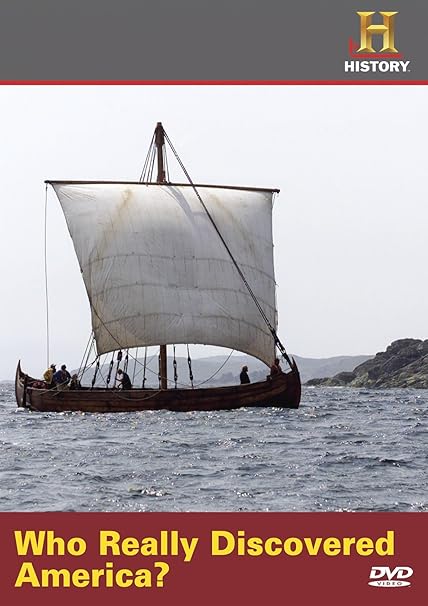
WHO REALLY DISCOVERED AMERICA : ANCESTRY WORSHIP GENEALOGY FILM REVIEW

WHO REALLY DISCOVERED AMERICA : ANCESTRY WORSHIP GENEALOGY FILM REVIEW

Christopher Columbus? His day has gone bust, in part because Native Americans rightly say they were on the American Continent (North and South) well before he arrived.  This film embraces the fact that there were possibly many excursions, by those sailing all sorts of ships from massive junks to simple canoes, that brought DNA into the America's which is the best evidence yet that people from Polynesia, China, Ireland, Norway, as well as, possibly, Hebrews, coming in to explore and some of them very likely had sex with individuals from previous populations.


As you probably know, the practice of genealogy relies on documents, but some people are having their DNA analyzed because of the matching services that usually come with having your hair, blood, bone marrow, or other body part analyzed.  Sometimes you can pick up the trail that you lost if you are matched with a "cousin" who knows more that you.  For many of us, the trail is lost after about three or four generations, but it is exciting to find out that in the deep past your people may have traveled the world, maybe by boat.

This film is exciting too because it brings the testimony of some experts who have made it their life's work to focus on micro-specialization, an assortment of archeologist, experts on how the ocean tides move ships, linguistics experts, people who can read ancient languages off rocks.

So here are some teasers!

Mysterious stones that are probably anchors from Chinese Junks have been found off the coast of Palos Verdes (Los Angeles) and in the 19th century the Chinese actually were fishing out there.  Maybe these are older from 1000 years ago?

It's believed the Welsh made it.  Could these be the blond haired "moon eyed" people who Cherokees interbred with the Mandan people.  President Thomas Jefferson heard there were Welsh speaking Indians.

Are carbon-dated Chicken Bones evidence that the Polynesians made it thousands of miles in 60 foot canoes about 1000 AD?

And the Chumash Natives (who lived from about where Santa Barbara is now and north) have fish hooks and boat building, and linguistic links to Polynesians as well!

The Vikings, The Irish (Saint Brendan the Navigator) and the Hebrews can all make claims, and evidence would include particular forms of building under the earth or with stone.

IT'S THE CHEROKEE, Chief Joe Sitting Owl, of the CENTRAL band, who got DNA testing.  Though only 1% of the Cherokee, Family Tree DNA did the work, and found no evidence of Hebrew or Jewish DNA.  Most Hebrew/Jewish DNA is in the G, J, T, or E haplogroups. but he says don't let this sway you away from the truth. 

My opinion: Maybe the Latter Day Saints can provide the funds for more Native American DNA testing, since their religious beliefs are that a Lost Tribe of Israel did make it to American.  Paleo Hebrew inscriptions in stones may appear in New Mexico, but perhaps most convincing is that a carbon dated rock with Hebrew inscriptions has been found in a Cherokee burial ground.

21 May 2016

DO YOU BELIEVE YOU'RE CHEROKEE? WHY SO? DNA?

SLATE : WHY DO SO MANY AMERICANS BELIEVE THEY HAVE CHEROKEE ANCESTRY?  The history of a myth by Gregory D. Smithers

An excellent article about the history of the Cherokee and the history of the United States.  READ IT ALL!

I did an extensive genealogy project for a family that lived in Cherokee County and can say, without DNA testing, that there was intermarriage between some of the family and the local tribe, before and after the Trail of Tears, but I don't know that anyone who didn't go to live with the tribe has bothered with DNA testing.  One of the "White" family married a man on the rolls.  However, another couple married and had land in the area prior to the first missionary church...and do not appear on the rolls.

EXCERPT:

The Cherokee tradition of exogamous marriage, or marrying outside of one’s clan, evolved during the 17th and 18th centuries as Cherokees encountered Europeans on a more frequent basis. Some sought to solidify alliances with Europeans through intermarriage.
It is impossible to know the exact number of Cherokees who married Europeans during this period. But we know that Cherokees viewed intermarriage as both a diplomatic tool and as a means of incorporating Europeans into the reciprocal bonds of kinship. Eighteenth-century British traders often sought out Cherokee wives. For the trader, the marriage opened up new markets, with his Cherokee wife providing both companionship and entry access to items such as the deerskins coveted by Europeans. For Cherokees, intermarriage made it possible to secure reliable flows of European goods, such as metal and iron tools, guns, and clothing. The frequency with which the British reported interracial marriages among the Cherokees testifies to the sexual autonomy and political influence that Cherokee women enjoyed. It also gave rise to a mixed-race Cherokee population that appears to have been far larger than the racially mixed populations of neighboring tribes...

16 November 2015

AUTRY WESTERN HERITAGE MUSEUM - CIVIL WAR and the WEST - EMPIRE and LIBERTY

THE AUTRY - OFFICIAL SITE

Just went to see a terrific exhibit - three hours in the hall - where I learned so much more about our American history, how complicated the question of slavery was throughout what would become our nation, back in the day when half of it was still territory, in dispute.

So here's a little story.  Twenty or more years ago it was still not acknowledged, despite the documents that genealogists would find, not even by some college history professors, that some Native Americans had slaves.  I myself found documentation proving this in a western county of North Carolina, but it just wasn't acknowledged.  A research friend of mine actually went to a professor at a college in Florida where he had once attended to discuss his findings and was told to his face that this had "never happened."

But this exhibit admits it.  Even the Cherokee chief John Ross had slaves.

Could it be that people did not see much difference between a slave and chattel labor?  It seems so.
In fact, the very poor who survived through chattel labor were in a class only slightly higher than a slave and individual circumstances being what they were, might not have actually been better off.  They might not have been "owned" the same but their living conditions could be deplorable.

I had not known that coal miners also hired and imported immigrant labor where men were put under contract to work.  I'd known about servants who came into the early colonies and worked years to pay off the price of their ticket, but didn't know this happened in the mid 1800's during the Gold Rush.

Also up for going against stereotype:  Prostitutes in the Wild Wild West, often depicted as willing and having a great time of it, when it's known that sex trafficking went on.   (I've known about the situation in San Francisco with imported Chinese women and children, often put in cages and locked underground, even given the tools to commit suicide once they became infected with VD, but somehow I bought the movie depictions of White Women going west for the opportunity to make money the only way they could among the gold miners.)

A simply amazing array of  historical objects, paintings, proclamations, and other museum-worthy items are on display, along with some diary narratives read by actors at the touch of a button that give various perspectives.

****

This brings up the USE OF DIARIES and NARRATIVES in your genealogy an history research.  Some of you may know about the SLAVE NARRATIVES that were collected by the WORKS PROGRESS ADMINISTRATION which are on a searchable database.  Additionally, you may find narratives in other places, such as written narratives available through FREEDOM OF INFORMATION ACT REQUESTS, as well as some military related documents.  WILLS can also be a form of NARRATIVE.

C 2015  Ancestry Worship Genealogy - BlogSpot  All Rights including International and Internet Rights reserved.

02 January 2010

PROVING NATIVE AMERICAN TRIBAL AFFILIATION

Recently another person asked me to help them prove they are part Native American, because they want Tribal Rights or advantages such as certain college scholarships.

I love a challenge.

Luckily the tribal affiliation this person is seeking is Cherokee, I believe Eastern Band.

I've found that contacting tribes for help from their end does not usually result in help. Many tribes just do not have the volunteers to coordinate efforts. I have many unanswered e-mails, even when the tribe has a website.

My advice is to proceed with proofing your genealogy starting with yourself. Then your parents, and then moving back through the lineage to show the death, marriage, and birth of the grandparents or great-grandparents who would be Native American. Besides certificates of death, marriage, and birth, THE UNITED STATES CENSUS helps you put these people in family groups.

SOMETIMES PEOPLE ARE IDENTIFIED AS NATIVE AMERICAN on census but SO WHAT?

So - honesty - I've found so many discrepancies when it comes to census information on a family when it comes to race that in itself race on a census is not dependable. There is always the question of if a family member reported these races or a census taker looked at a person and made a personal judgment.

BUT LOCATING THE FAMILY ON CENSUS IS STILL ALL IMPORTANT because it places the family at an address, a location.

CHECKING THE NATIVE AMERICAN CENSUS is a good idea, in this case the census of the Cherokee is categorized as one of the FIVE CIVILIZED TRIBES! You may or may not find people listed with Indian names and/or Americanized names. (By the way the notion that the Cherokee were "civilized" because they were more cooperative with the U.S. Government is subjective.)

Do all these steps - as much as you can - before contacting the tribe! The tribe will probably only tell you what their requirements for membership, if at all possible, are. Usually proving 1/16th relationship is the key.


UPDATE MARCH 2016: This is a very popular post and I'm so happy to be of some help to all of you.  Now that DNA testing is getting more and more specific, I think it's a good idea to get a DNA test as part of your quest.

UPDATE DECEMBER 2025: Please use the search feature on this blog as I've posted much more on Native American ancestry since this post!

C 2010 - 2025 Ancestry Worship - Genealogy BlogSpot All Rights Reserved