14 February 2024
LEAGUE OF WOMEN VOTERS DAY
06 July 2023
TRAVELS WITH GEORGE : NEW JERSEY WAS DIFFERENT : THE RIGHT OF WOMEN and AFRICAN AMERICANS TO VOTE : SUFFERAGE
Excerpt: Page 32
"In terms of suffrage and political access, New Jersey was different than from any other state in the Union. Since 1776, the state's constitution had given voting rights to any adult - male, female, white, or African-American - who had lived in New Jersey for a year and was worth at least fifty pounds. (This would remain the case until 1807, when the Anti-Federalist state legislature restricted the right to vote to white males in an effort to prevent women, who tended to vote Federalist, from participating in the 1808 presidential election, ultimately won by the Anti-Federalist Thomas Jefferson's heir-apparent, James Madison.) Whether or not New Jersey's liberal voting laws in 1789 had anything to do with it, the women of Trenton took the leading role in celebrating Washington's return. Under their direction, a twenty-foot arch supporting thirteen pillars was constructed over the bridge across the Assunpink. Just as had been done in Philadelphia, the arch was entwined with branches of evergreen, laurel, and flowers. Emblazoned across the arch's top in large gold letters was the phrase, "The Defender of Mothers Will Be the Protector of the Daughters. Above the inscription was a cupola of flowers encircling the dates of Washington's twin victories. December 26, 1776, and January 3, 1777, topped by a large sunflower.
When given the choice, Washington seems to have preferred the company of women over men. He loved to dance, and after a dinner party he could be found in conversation with Martha and her lady friends rather than his male peers. He particularly enjoyed speaking with sharp-witted, articulate women..."
C 2023 Ancestry Worship - Genealogy BlogSpot
03 November 2020
29 October 2020
I THREW IN MY BALLOT - ASK YOUR FEMALE RELATIVES WHAT THEY KNOW ABOUT THE WOMEN IN YOUR FAMILY and THE RIGHT TO VOTE
I threw my ballot into a box near our library here in California.
This is a good time to work on the women's history in your family. Did grandma or great-grandma vote? Where and when? Why or why not?
What did the husbands and brothers think of this?
Did the women ask their husbands how to vote?
Did they actually follow that lead when they got into the ballot box?
Who doesn't vote now and why not?
All these things should be included in any American family history.
C 2020 Ancestry Worship - Genealogy BlogSpot
10 October 2020
03 March 2020
VOTE! VOTE! VOTE!

11 January 2020
2020 is CELEBRATION of 100 YEARS OF WOMEN's VOTE
This year is 100 years since women (but for African American women in some states and Native American women) got the right to vote. It was hard won. Women called "suffragettes" rather than "feminists", fought for this right. It took over 40 years.
NATIONAL PARK SERVICE GOV: HISTORY OF WOMEN'S RIGHT TO VOTE
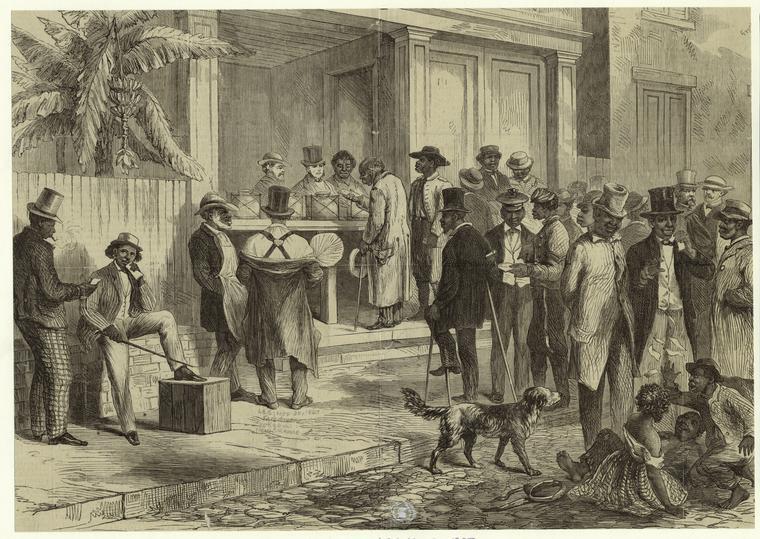
EXCERPT: Even though they were legally able to vote now, African American women were often barred from the polls. American Indian women were also not considered U.S. citizens until 1924 and could not vote.
It was a process.
Once Women got the right to vote in 1920 when the 19th Amendment was ratified, they also got the right (and responsibility) to file for their own citizenship. If you are doing African-American research, you want to check what state your ancestor was in and when African-American women there got the right to vote. Remember that there were local and state efforts by women to gain the vote as the momentum built over decades. Learning the niche history of your ancestor's voting and citizenship status can be an interesting addition to your family history writing. Before this it was assumed that the head of household - a man - voted as a representative of his family and that women's opinions ought to reflect that of their husbands.
So before women got the right to vote, they could become citizens by being included in their father's petition - also any children under the age of 18 would have been included. And yet, there was a punishment in place for women who married men who were not citizens yet and that was that they lost their own citizenship.
In my years as a genealogist, I have seen that some widows petitioned for their own citizenship and that of their children. So many immigrant men did dangerous work and lost their lives and there were many widows on their own until a possible remarriage. Perhaps remarriage was easy for the 20 somethings but an older widow with many children could find herself living the rest of her life without a husband to support her.
C 2020 Ancestry Worship Genealogy - BlogSpot
All Rights Reserved