Showing posts with label Colonial American History. Show all posts

25 October 2025

LOVE and HATE IN JAMESTOWN by DAVID A. PRICE: ANCESTRY WORSHIP BOOK REVIEW

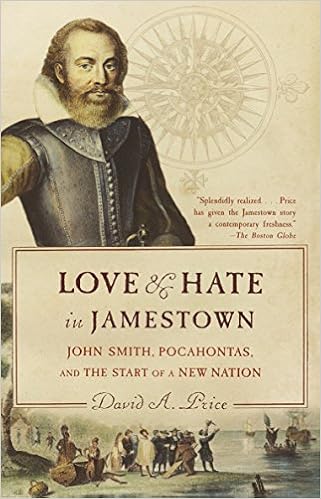
Image result for Love and Hate in Jamestown
LOVE and HATE IN JAMESTOWN by DAVID A. PRICE: ANCESTRY WORSHIP BOOK REVIEW (First published on this blog on February 9, 2019)

PROMISED to clear away the misconceptions and half truths, let's start with that explorer Captain John Smith never had a romance with Pocahontas, who was about 11 years old when she first saved his life. She was the favorite of Powhatan, the "King" of a great Native American Nation, one of his children by his many wives. For those of you who may be seeking ancestry connected to Powhatan, consider that he'd take a wife and discard her after she had a child by him, which sounds like a strategy to spread you genes to me. (In European Feudal times the Lord of the Manner, or the owner of the Estate, sometimes also had rights to have sex with a woman before she married another subject.) Captain Smith was appreciative, after all the maiden saved his life twice, but if she had a thing for him, he considered it a platonic relationship. Smith was never in his 40 years or so of life known to have a romantic relationship with any woman.  

In 1607 the first three ships, all quite tiny really, landed in Virginia with an attempt to colonize. (The Spanish considered this part of the country to be theirs and recognized "French America." The British were far behind in their attempts to colonize.) In 1608 a second supply of colonists arrived including the first woman, the wife of a gentleman, and her maid. With 200 men to this one unmarried maid, well, she was soon married. Speaking of the gentleman class - the leisure class - of passengers, they apparently expected to have adventures but not to have to work. But not for long. Captain Smith basically ruled that if you did not work, you did not eat.

Captain John Smith had military experience, having been in warfare in Hungary, but he was not expected to rule the colonies. Deaths in the colony allowed him to rise to the task and he did so well. Considering that he and the Englishmen had to try and understand the Native American culture they encountered, he showed patience and cunning. Smith knew how to bluff and so the starvation of the colonists was at best delayed.

In this book, you'll read about the relationships between the English and Native Americans, what worked and what did not. Smith was set aside when the "real" leaders arrived and that's when the bloodshed began. 

Pocahontas was converted to Christianity, married an Englishman and gave birth to the first Native-American/ English child. She traveled to England and was introduced to society as a woman of rank but she didn't live long. She had been told John Smith had died. When she saw him in England she was not amused.

Also of interest, besides Hungary being a training ground for Smith, is that some Germans and Poles came to be craftsmen, to make of glass for an example, in the New World. Thus central Europe and Europeans are part of this story.

Finally, yes there was cannibalism.

C 2019 - 2025 Ancestry Worship Genealogy - All Rights Reserved including Internet and International Rights.  This post has been slightly edited July 2019

23 March 2025

BOOKS IN ANCESTRY WORSHIP GENEALOGY CAN BE FOUND BY CLICKING ON THE TAB BOOK RECOMMENDATIONS!

Over the last fifteen years I've read, posted, excerpted, reviewed and recommended a whole lot of books. To find these books try clicking on the tab BOOK RECOMMENDATIONS!

These images are just some of the books!


26 July 2023

TRAVELS WITH GEORGE : GEORGE AND MARTHA WASHINGTON and THEIR SLAVES


From previous reading on this blog about Martha Washington, I can tell you that she first married a much older man who happened to also be perhaps one of the wealthiest colonials and campaigned with his father to be his wife.  When that man died, she became the wealthiest widow in the colonies.  She brought with her into her marriage to George a fortune, which as her husband he was allowed to preside over. However, it would seem that George was good about discussing things with her and that they had a good relationship. One of the things I just learned in Nathaniel Philbrick's book is that half the slaves that the Washington's owned in their marriage came with her and were first owned by her as part of her "marriage dower."  A dowry is money, land, wealth, anything that is an asset that a bride brings with her into a marriage, and a dowry was most often provided by a woman's father upon her first marriage. 

In the passage I've selected from my reading of this book, the problem of owning slaves and wanting to free them, is one that George and Martha Washington contemplate. However, the situation becomes especially person when one slave runs away and the Washington's put out ads to have her tracked and re-enslaved. You could say that historically this is not their proudest moment.

Page 113 Excerpt and Notes:  "Even though Washington had long been contemplating the emanicipation of his enslaved workers at Mount Vernon, he resolved to do everything possible to get Ona back.  (Ona was a twenty year old woman who had been Martha's personal servant.  The issue arose because Martha planned to give Ona over as a present when her "tempermental" grand-daughter Eliza as a wedding present.)  Ona was the property not of Washington but of the estate of Martha's deceased husband and was therefore known as a dower slave, meaning that technically he couldn't free her if he wanted to.  Upon Martha's death, Ona and the other dower slaves would go to Martha's grandchildren.  As Washy's and Nelly's guardian, Washington was legally bound to look after their financial interests, and he went after Ona with all the remorseless zeal that had characterized his pursuit of Lord Cornwallis at Yorktown."

Notes: Ona was absconded and to do so Washington may have abused his Presidential power.  However, Ona had not been seduced by a "Frenchman" as the Washington's proposed and she said she would only come back to serve the Washington's if they agreed to free her once they were both deceased.  They refused and she was free and married.  The Washingtons attempted to get her back another time but failed.

When Washington died in December of 1799, as in his will, all his slaves were freed.  But not Martha's dower slaves.

Ona had a difficult life as her husband died less than seven years into the marriage and she had by then three children to raise alone.

Page 305 " Many white SOuhterners condemned Washington's decision to free his enslaved workers, using the transparent and spurious claim that the enslaved at Mount Vernn were ill prepared for freedom and 'succeeded very badly as freemen." IN truth, the first free Black COmmunity in Fairfax County was composed of, acording to contemporary tax reords, "George Washington's free negroes."

To learn more about author Philbrick's travels that followed George Washington's and slavery, I suggest that reading this book will fairly take you through history, especially as he goes into the Carolina's and the scene of one of the largest sale of human beings ever.  Washington was not impressed with the Carolina's which were covered in a type of pine tree that is now near extinct with pine cones as big as pineapples!

C 2023 Ancestry Worship - Genealogy BlogSpot

To bring up past posts about Martha Washington, click on the label Martha Custis Washington.

22 July 2023

TRAVELS WITH GEORGE : TOBIAS LEAR EVENTUALLY MARRIED INTO BOTH GEORGE and MARTHA'S FAMILY


One of the surprising things about genealogy research is that one never knows when some unexpected archival type documents will be found in an individual's possession or buried in some library where maybe no one ever understood the value of them...

Excerpt and Notes: Page 109 -110  (What is now Kittery Maine marks the northernmost point of Washington's tour.  He stayed in what was called "the Red cottage" built about 1740 and Washington stayed there November 2nd, 1789.  Author Philbrick and his wife called the present owner and met with him. It is on Portsmouth Harbor.  The owner Jim is related to Tobias Lear and Stephen Decatur a American naval hero during the War of 1812.  He opened a chest that belonged to his grandfather that had not been open in 80 years and there found a family and genealogy treasure.  It is a ledger kept by Tobias Lear when he served as George Washington's private secretary during his first term as President of the United States.

"The large red-leather book, filled with daily transactions, from the purchase of theater tickets to that leopard-skin saddle pad, provided a remarkably detailed window into Washington's household during his first term as President.  Drawing upon this and other Washington-related documents that had come into Lear's possession after the President's death and never before seen the light of day, Decatur compiled Private Affairs of George Washington: From the Records and Accounts of Tobias Lear, Esquire, His Secretary.

Excerpt page 111 (How this became part of Jim's family's possessions.)

By the time the President had died, Lear was married into the family.   His first wife died of the Yellow Fever epidemic in 1793, and he first remarried Frances "Fanny" Bassett Washington.  After he was widowed again, because she died within the year of TB, he married Frances Dandridge Henley, who was niece of Martha's.  Therefore he had married into BOTH George Washington's family and hi wife Martha's.

C 2023 Ancestry Worship - Genealogy BlogSpot

12 July 2023

TRAVELS WITH GEORGE : PRESIDENT WASHINGTON'S BARGE - THE GREETING IN NEW YORK : ABOUT THE STATUE OF LIBERTY


Excerpt and Notes: Page 43-34  (Washington goes by barge to New York from New Jersey and his presidential barge is  greeted by a flotilla....

"... This forty-five foot open boat featured an awing and cushions and was towed by thirteen oarsmen dressed in white.  Washington was accompanied in the barge by a group of dignitaries...  But the New Yorkers were just getting started....

(There was singing - groups of singers - greatly effecting the President.)

Suddenly the waters surrounding the barge erupted into foam.  "At this moment a number of porpoises came playing amongst us, as if they had risen up to know what was the cause of all this joy." But the most impressive sight was still to come as the barge continued its advance toward the New York City waterfront.  "We now discovered the shores crowded with thousands of people.  Men, women, children.  Nay I may venture to say tens of thousands; from the fort to the place of landing although near a half a mile, you could see little else along the shores in the streets and on board every vessel but heads standing as thick as ears of corn before the harvest."  (quoting Boudinot)

(Still, this display just made Washington more anxious about his new role and how he might please the people.)

Excerpt: (Author Nathaniel Philbrick and his wife go to Battery Park - where the Statue of Liberty is.)

... "And yet we did see quite enough: The Statue of Liberty looming above the water, her oxidized copper skin darkened with verdigris  I had always thought the statue depicted the goddess of liberty standing proudly with her gilded torch held high --a welcoming beacon of hope for the millions of immigrants bound for nearby Ellis Island throughout much of the twentieth century.  But once our boat, appropriately named Liberty, had taken us to the landing spot on the south side of the island. I could see that, no, the goddess was not standing still;she was striding forward, the broken shackles of a chain at her feet.

The Statue of Liberty, I soon learned, had been inspired by the abolition of slavery during the Civil War.  A gift from France, it had been left to the Americans to raise the money for the statue's 150 fott-high- pedestal.  Fund raising had lagged until the newspaper publisher Joseph Pulitzer appealed to the readers of the New York World and raised a significant portion of the required fields.  The Statue of Liberty was finally dedicated in 1886."

C 2023 Ancestry Worship - Genealogy BlogSpot

06 July 2023

TRAVELS WITH GEORGE : NEW JERSEY WAS DIFFERENT : THE RIGHT OF WOMEN and AFRICAN AMERICANS TO VOTE : SUFFERAGE

 Excerpt: Page 32 


"In terms of suffrage and political access, New Jersey was different than from any other state in the Union. Since 1776, the state's constitution had given voting rights to any adult - male, female, white, or African-American - who had lived in New Jersey for a year and was worth at least fifty pounds. (This would remain the case until 1807, when the Anti-Federalist state legislature restricted the right to vote to white males in an effort to prevent women, who tended to vote Federalist, from participating in the 1808 presidential election, ultimately won by the Anti-Federalist Thomas Jefferson's heir-apparent, James Madison.) Whether or not New Jersey's liberal  voting laws in 1789 had anything to do with it, the women of Trenton took the leading role in celebrating Washington's return. Under their direction, a twenty-foot arch supporting thirteen pillars was constructed over the bridge across the Assunpink. Just as had been done in Philadelphia, the arch was entwined with branches of evergreen, laurel, and flowers.  Emblazoned across the arch's top in large gold letters was the phrase, "The Defender of Mothers Will Be the Protector of the Daughters. Above the inscription was a cupola of flowers encircling the dates of Washington's twin victories.  December 26, 1776, and January 3, 1777, topped by a large sunflower.

When given the choice, Washington seems to have preferred the company of women over men.  He loved to dance, and after a dinner party he could be found in conversation with Martha and her lady friends rather than his male peers.  He particularly enjoyed speaking with sharp-witted, articulate women..."

C 2023 Ancestry Worship - Genealogy BlogSpot

02 July 2023

TRAVELS WITH GEORGE : ANCESTRY WORSHIP - GENEALOGY BOOK REVIEW

Nathaniel Philbrick*** is adept at writing about the early inhabitants of the colonies and key figures in the foundation of the United States. This book is about George Washington, who took office in 1789 and was our first President after a successful Revolutionary War campaign. It's about his family, his wife Martha, and slavery, as well as other aspects of the man's personality and character. 

What Philbrick did was travel the route that Washington himself did: New England to South Carolina and a small area of Georgia. He went to some of the places where Washington's presence was well known enough to enjoy tours and reenactments today. He talked to people.  As he says on page 6, "But this wasn't going to be the same kind of carefree ramble enjoyed by Harry and Bess (Truman)  in the 1950's. We were, after all, following the travels of a slaveholder at a time when Confederate monuments were being removed across the South.  The country's political divide seemed to be widening by the day.  And yet I didn't want this trip to be about what separates us.  I wanted to find out how Washington attempted to bind us together into a lasting union of states.  Acknowledging and even delving into his weaknesses and failings, especially when it came to slavery, I wanted to know what Washington got right - what tools he and his generation had left us to begin to build a better nation.

Oh, and a little independent research on my part; our first three presidents, Washington, Jefferson, and Madison all spoke with English accents. They didn't just speak with that accent, they had that accent because they were British, and their thoughts had to be influenced by a certain mentality of that ethnic heritage, that political system - the King - even as they wanted different for a new nation.

(I try to think of my own ancestors who were in Europe in 1800.  I often wonder what they heard of the American Revolution and what they thought of it.)

There are a few passages in this book that I thought were especially telling or valuable which I will be excerpting. In particular the way Washington dealt with his slaves and those who were brought into the marriage by his wife Martha, called "dower slaves," was especially telling. Laws of inheritance at the time prevented him from decisions on Martha's.

As I have been, rather than do one extremely long session of excerpts, I will play it forward and readers who are interested in more can bring up all posts by clicking on the label or using the search feature...  Try the words George Washington.  This book is a recommended read for those of you who like to learn more about American History, especially as it might pertain to your own genealogy research.

Oh, and as a P.S.  The author and his wife took their dog with them on their travels.  Washington loved his dogs.  Page 23:  "Not only had he almost single-handedly developed what we call today the American fox-hound, but he had a great affection for his dogs, giving them names like Sweet Lips, Drunkard, and True Love.

C 2023  Ancestry Worship - Genealogy BlogSpot

*** In the past I reviewed his book about the Mayflower.


28 June 2023

HISTORICAL MARKER DATABASE - AN INTERESTING WAY TO LEARN AMERICAN HISTORY of PLAN YOUR LOCAL TOUR

HISTORICAL MARKER DATABASE 

How many of us have toured our locale in order to learn the history of the place? 

Happened upon this site and was amazed at what I did not know.  Searchable and, if you know of a marker that should be included, you can suggest additions. So many structures have been built over but the markers noting them are there to discover.  And what I get is that in each case the marker had to be thought noteworthy. It had to be proposed, designed, determined, and paid for, as well as placed. Sometimes this was done because what had happened there was over or what had been built there was being taken down.

To quote the site, historical markers lead us to "public history cast in metal, carved on stone, or embedded in resin."

So, perhaps you are standing on an old burial ground, or the location of the school your great grandparents went to is marked - or still standing.

Worth exploring!

15 April 2023

ROYAL and AMERICAN ANCESTRY OF MEGHAN MARKLE? JUST HOW GENETICALLY RELATED ARE WE TO SOMEONE WHO LIVED 700+ YEARS AGO?

AMERICAN ANCESTORS ORG ; MEGHAN MARKLE ROYAL and OTHER ANCESTORS 

There are no charts showing the connections, but this article from the New England Historical Genealogical Society, is based on Meghan's father's heritage, which connects importantly to one specific immigrant to early Boston who descended from King Edward III (who died in 1377.) For Anglophiles, the connection to aristocracy that the Duchess of Sussex has will especially impress. More so, this article is about (GENEALOGICAL) PYRAMID COLLAPSE, which is, that the further you go back, the more chances there are that you will find familial connections with the same persons on more than one line. Among royal houses, this seems to be especially common since there were arranged marriages that kept them in land and property and aligned with allegiances.

The population was smaller. People tended to marry local or within their class or status. Earlier death often meant earlier marriage and quick remarriage, step and half siblings. And sometimes a person might just have had the genes or transmitted the genes to withstand so much that killed off most people. We find someone who had many children who lived to also spawn. For instance, among the Mayflower descendents, one particular passenger has the very most.

But I want to see the charts, the straight connections, because if we include cousins and other relations, probably every one of us is "related" to someone famous or who succeeded well in life, or someone infamous who failed.

The mysteries of DNA are being revealed bit by bit, but since we know that we are a combination of genes transmitted from both sides of our family, that each generation is a different combination of genes, that genes mutate, a genetic heritage that is documented back 700+ years or so may well have little to nothing to do with us.

Not responsible for what our ancestors did or did not do, so we can't take credit, but we can come to understand them and their lives and their times better, and reflect on how that has influenced us.  What choices did they have?  What choices do we have?

C 2023 Ancestry Worship - Genealogy BlogSpot

14 December 2022

HOW THE COLONIAL AMERICANS KEPT WARM IN THE WINTER? HARDLY!

Loved this article!  NOVA PARKS PDF FILE On COLONIAL AMERICANS IN WINTER

It's part of the Carlyle Connection newsletter.

Items in the house frozen solid?  Closing the shutters?  As you contemplate a winter of unaffordible heating, consider...

that

"In addition to keeping active, people wore thick layers of woolen clothing and often slept in them along with flannel night shirts and caps on the coldest nights.  Most people, including the wealthy, went to bed in unheated bed chambers."

****

Wear your beanie cap to bed.  Most of the heat in your body goes out through your head!


20 June 2020

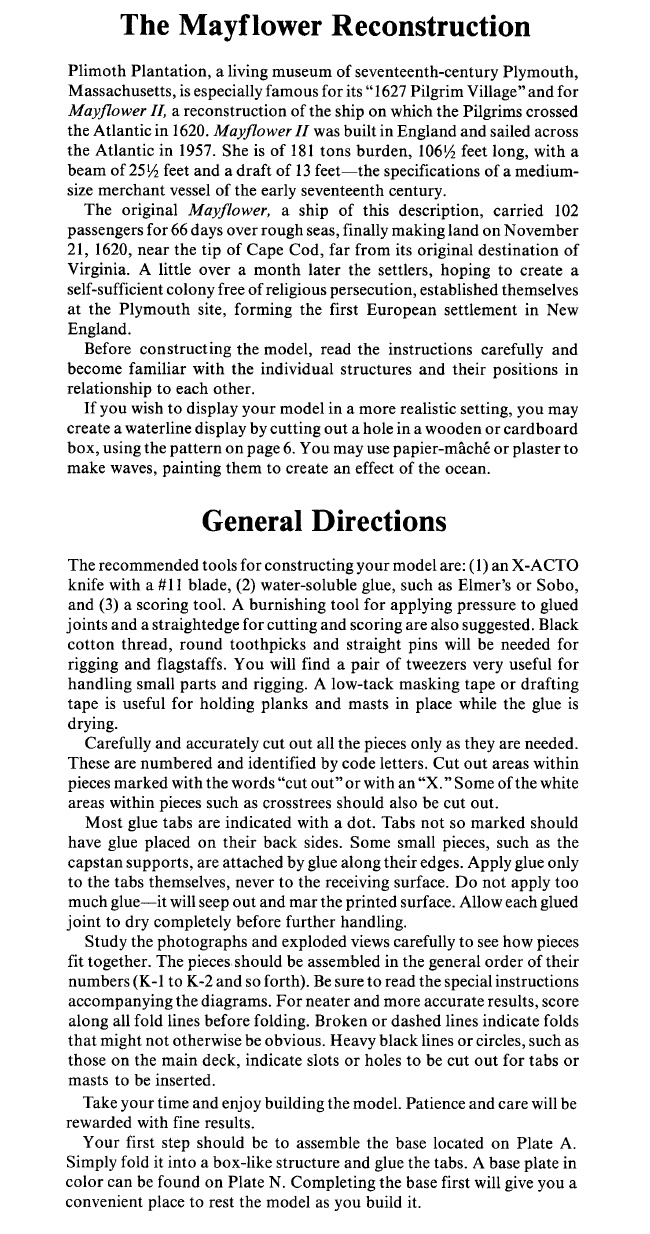
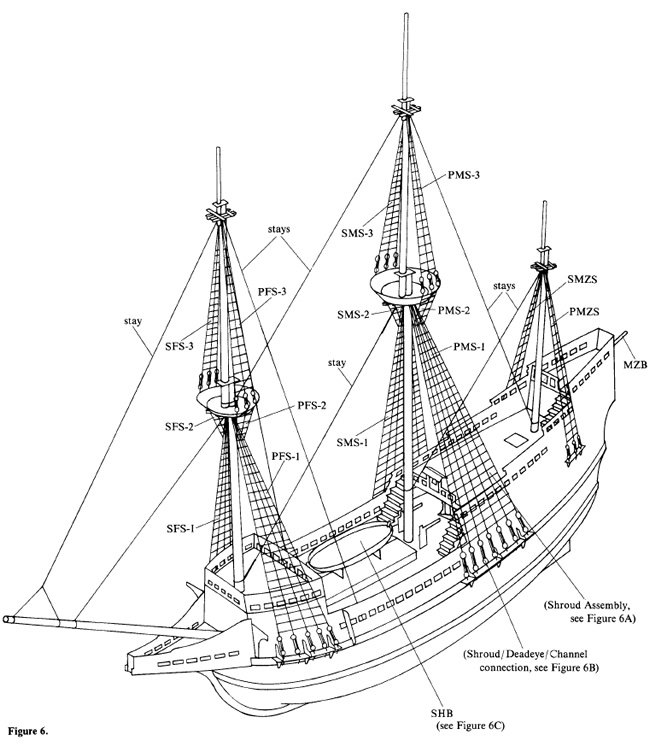
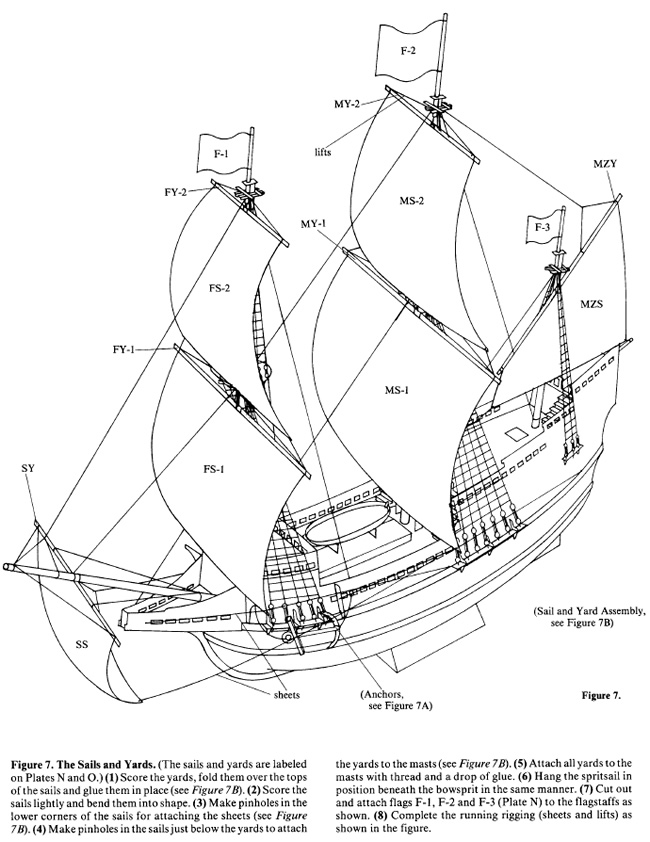
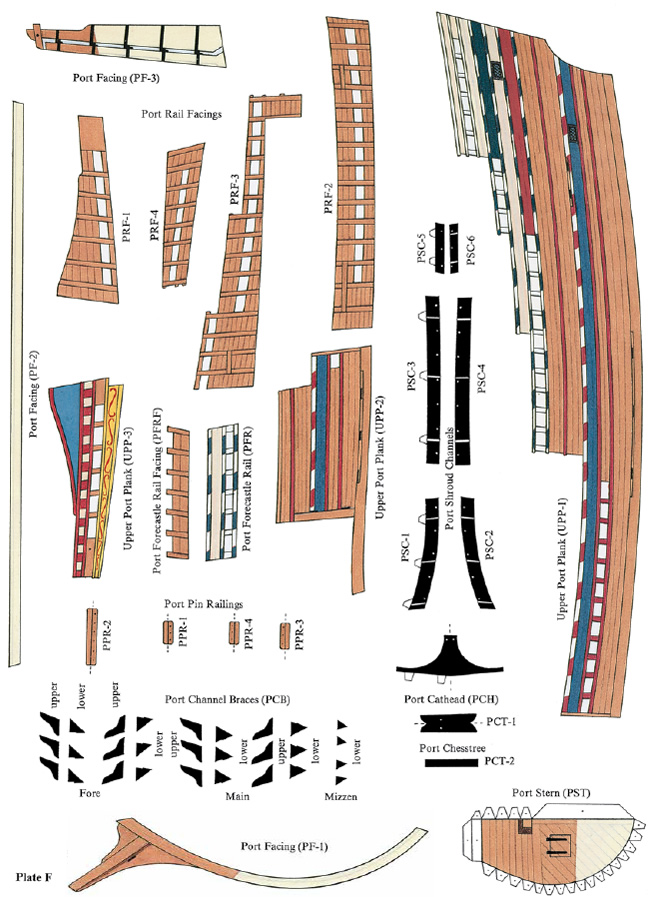
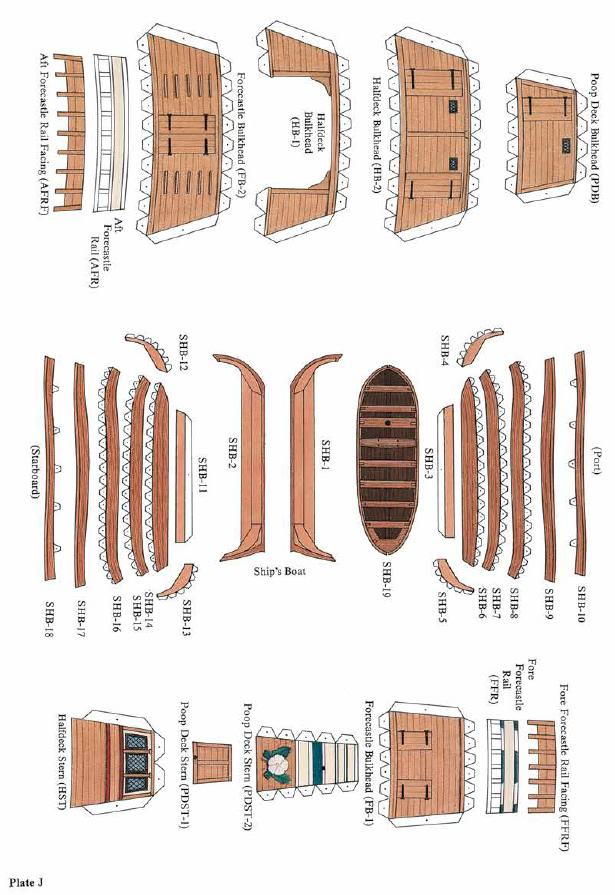
BUILD A LITTLE MODEL OF THE MAYFLOWER

Thanks to Dover Publications, here is the project.  You'll probably want to enlarge before you cut out and you still might need some tweezers, but hey, this is at no cost to you!  Celebrate the 400th anniversary of the landing of the pilgrims on the Mayflower and indulge yourself in some Colonial American history!


  I've copied these in the same size so all parts should fit.  I would try to enlarge X2 or X3.  Have fun!

22 December 2016

POLAR VORTEX FREEZES ME INTO PLACE

Here in Southern California, few people actually have the appropriate outer wear for cold, rain, or snow.  So it's kind of funny to be having coffee at a coffee house near a transportation hub, nice and warm inside, see the rain pouring down outside, and watch all the people who have used plastic trash bags to fashion rain-coats of sorts or who are holding plastic bags over their heads, racing down the streets. 


Umbrellas are sold here, particularly by enterprising street venders who buy some wholesale downtown and head out.  They are mostly made in China and good for one storm, one blast of cold air.  Then they turn inside out or break off and go into the trash bins.


It's been raining off and on for a couple days, and I'm seeing men outside without hats or  umbrellas, without sweaters or jackets.  I'm seeing women who have matching hats and scarves; they must have them stored away for years for the opportunity to wear them!


Maybe you can appreciate that we endured weeks of above average temperatures - in the nineties and the hundreds - this past summer, and that means that when it goes down into the forties or fifties we've experienced a temperature crash.  I'm OK with the outside temperature in the 60's but one recent morning at five, I needed to take my very patient dog outside already, and it was thirty seven degrees and windy.  There was black ice on the street.  I was creaking.  Steam came up from under the dog as she went.


THAT'S COOOOLD. 


But I promised I wouldn't complain about the cold when it was too hot out.


On the news, the POLAR VORTEX, the reason for this FREEZE.  I looked at the map and long underwear sales must be fierce in much of the United States.


I think of our ancestors who came to the states from the cold and remained living in the cold, as if cold was their heritage and their inheritance.  Seems like many of these people were bodily acclimated to cold weather.  Did they really not notice it?  Not mind it?  Were they just sturdier people?  I think of Native Americans.  I think of Colonials.  I think of dwellings without insulation or central heating.  Hovering near a fire place.


For me, this stretch of rain and cold just makes me want to burrow in.  If I could, I'd be cabin bound.  Instead I'm doing a little more decorating, baking, sewing, and crocheting, than usual.


Happy Holidays to All My Readers!

30 July 2013

PLAT MAPS ARE AN OPPORTUNITY TO LEARN LOCAL HISTORY : KID GENEALOGY

I'm not sure how "Plat" maps got their name. 

(If any of my readers know the answer to that, please leave a comment!)

Plat maps are maps that often feature the property lines of farms or rural areas, areas that may now be cities or suburbs.  In a way they are like zoning maps today.

Plat maps have the names of the owners of that land on a specific year and can tell you so much about the early settlers of an area,  and lead you to more information such as who got Land Grants, names to search for in early wills and land sales, etc.

Something that can be a fun early genealogy research lesson for kids is to find the Plat map for where you live now and see how many of the roads, lakes, and other geographical features bear the names of those early settlers say right before and after the Civil War.

I like the big old fashioned maps that have been replaced by digitalized editions on the internet as I find them far easier to read, but if you live far away from a library that houses the big maps this is a good option. Locally, you might find that a historical society or university library has a collection that you can use without being a member or student.

After the American Revolution, many soldiers who fought for little or no pay and lived were rewarded with land.  These are called "Reparation Lands."  Not exactly "40 acres and a mule" but something like that.

Looking at the same area before and after the Civil War is also an interesting history lesson.

C 2013 Ancestry Worship - Genealogy

15 May 2013

THE JEWISH AMERICANS : A SERIES BY DAVID RUBIN : PBS DVD


I think COLONIAL JEWISH HISTORY, because it is most obscure, is of most interest to me these days. (That's one of the reasons I was so fascinated with the work being done to understand the Melungeons from multiple points of view - DNA, genealogy research, and family history stories. See my past posts on them!)

*****
The JEWISH AMERICANS is a two set so this film series can be an evening of learning.  Here is what I learned:

The first Jewish synagogue was in New York City (New Amsterdam) long before the United States was formed, in the 17th century.

Charleston South Carolina had the largest Jewish community during slave times.

There were only about 2000 Jews in the US in 1776, at Declaration of Independence time.

Jews fought in the Civil War on both sides.

Among the many early business people and entrepreneurs was Joseph Speigel who eventually owned the catalogue company of the same name. Peddlers traveled on foot visiting farmsteads until they could afford a wagon until the catalogue went door to door through the mail.

The Ten Gallon hat, so associated with the Old West was created manufactured and sold by Jewish people.

By 1870 there were a quarter of a million Jews in the United States. Colonial Jews had a difficult time finding marriage partners and keeping their faith with no synagogues. This became the time of great synagogue building. Some of these synagogues are the most fantastic in architecture and ornamentation. Some communities however, created plain buildings that would not obviously be synagogues.

Rabbi Weis introduced organs, family pews (rather than separation of the sexes)... This was the founding of Reform Judaism, attributed to the German Jews.

German Jews were citizens and thought Russian and Polish Jews from the old country in the Industrial Revolution needed some help to become more American.

DVD put out by C 2008 Greater Washington Educational Telecommunications Association.

05 January 2013

SAVING THE NATIONAL TREASURES : NOVA DVD : THE DECLARATION OF INDEPENDENCE

This was a fascinating film, about restoration efforts to preserve our founding documents, focusing on the preservation of the much faded Declaration of Independence. In the 1940's a dead bug had infiltrated the state of the art case for the parchments and had eaten some of the edging. An effort to preserve the documents from all natural disasters including the atom bomb was made. It might have been state of the art but it was not good enough.

In the 1990's technology had advanced and so a team of experts - perhaps too many - came together to debate and design the cases. Crystals were forming on the surface of the parchment. Even vibration could have been damaging the documents. Helium gas had been used and was leaking. There is always the problem of humidity. The new case uses argon gas. An effort to include silica for humidity control was dismissed.

Funniest thing. The whole operation of moving the documents and restoring them was a secret operation. CODE NAME ELVIS!

02 December 2012

THE WHITE HOUSE PRESIDENTIAL BIOGRAPHY OF PRESIDENT ABRAHAM LINCOLN

THE WHITE HOUSE PRESIDENT BARACK OBAMA SITE on PRESIDENT ABRAHAM LINCOLN

You can read the entire article by clicking on that link above, but here is the part that is important to genealogists...

..."The son of a Kentucky frontiersman, Lincoln had to struggle for a living and for learning. Five months before receiving his party's nomination for President, he sketched his life:


"I was born Feb. 12, 1809, in Hardin County, Kentucky. My parents were both born in Virginia, of undistinguished families--second families, perhaps I should say. My mother, who died in my tenth year, was of a family of the name of Hanks.... My father ... removed from Kentucky to ... Indiana, in my eighth year.... It was a wild region, with many bears and other wild animals still in the woods. There I grew up.... Of course when I came of age I did not know much. Still somehow, I could read, write, and cipher ... but that was all." ...

This article tells you the county and state Lincoln was born in and where his parents would also be found.  (By the way, I've heard that the actor Tom Hanks is related to the Nancy Hanks family.)


28 November 2012

LOOKING FOR LINCOLN : HOSTED HENRY LOUIS GATES JR. : ANCESTRY WORSHIP GENEALOGY FILM REVIEW


LOOKING FOR LINCOLN is a film about trying to find out who Abraham Lincoln really was, who he was as a man, a person, rather than as we have been told he was, rather than as he was marketed.  It is a question of re envisioning history, a difficult task.


Interestingly, Abraham, who is said to have walked rigidly and stood six foot 4 inches tall, and was considered odd looking, was quite interested in having himself photographed, aware that he needed a photo to market himself as a Presidential Candidate and President, a photo that spoke for him.  The image he finally chose was the image that was reproduced or redrawn or painted many times.

This video questions if it was ever Lincoln's Big Idea to Free the Slaves.  At the time some of those who wanted to abolish slavery also thought about sending Free people of Color to Africa, to establish themselves there.

I believe this is because the line between slavery and indentured servitude was sometimes very thin.  Someone who served their servitude and someone who was freed or bought others out of slavery.

Doris Kearns Goodwin and Tony Kushner, Pulitzer prize winning authors who've written about Lincoln and other scholars including genealogist and historical professor Henry Louis Gates, Jr. speak in this film.

Film came out in 2009 produced by WNET ORG.


C 2012 -2025 Ancestry Worship BlogSpot  All Rights Reserved including Internet and International Rights

24 November 2012

COMING UP - ABRAHAM LINCOLN!

Living in Southern California where a large part of the economy is based in movie making, I've been seeing advertisements on bus stops and all around for the movie that's just coming out in which the actor Daniel Day Lewis acts as Abraham Lincoln and Sally Fields acts as Mary Todd Lincoln.  In this company town there is Oscar Buzz about the film.  The screenplay by Tony Kushner is said to be excellent and well, this may be one of those rare films that has earned its right to call itself an "event."

LINCOLN the movie official site link

We Americans seem to have an ongoing fascination for Abraham Lincoln as a character and as someone who had an impactful role in History, and like the story about the sinking of the Titanic, there have been a number of films over the years in which various actors, directors, and screen writers have had their chance to put forth their Point of View.

You may also consider President Lincoln to be a fascinating GENEALOGY CASE STUDY!

I'll be posting on Lincoln, American History and Genealogy, and Slavery from now through February, which is African American Month, along with my holiday posts!  I know that many of you genealogy researchers find the months of November and December to be down time when it comes to research but what's great abouty using Blogger is that the posts remain to be found at any time in the future as well.

11 May 2011

STATE OF NEW JERSEY SEARCHABLE DATABASES : NAME CHANGES ENLIGHTENIING

If your research is PRE 1900 (or so) New Jersey, the Department of State of New Jersey offers some searchable databases on line. These focus on early colonial and 19th century records. I see a lot of availability and duplication of those records, but HERE IS A GEM! (Link above!)

Legal Name Changes, 1847-1947 may be of some help for researchers focusing on the great age of immigration. You'll find a lot of "ethnic" surnames made shorter or made easier to pronounce or gone Anglo here: Italians, Poles, and Hungarians doing major changes. Some of these however, may just be about adoption, divorce, or not wanting to be associated with bad news relatives.

https://wwwnet1.state.nj.us/DOS/Admin/ArchivesDBPortal/NameChanges.aspx

I love searchable databases THAT RESPOND TO FIRST NAMES as well as surnames like this one Also consider what an ethnic name in another language may translate to in English when you search. Francis, Franko, etc became Frank.