
What a lovely old image, curtesy of Graphics Fairy.
When did you last go on vacation?
Did you go on vacations as a child? Where to?
What is your fantasy vacation?


 Some of my ancestry lived in New Jersey. New Jersey is a rather difficult state due to privacy laws and such. I remember years ago sending money orders to New Jersey for the death and other records that would "prove" what I had come up with and they were returned. Basically, if I didn't already know the information, then I could not have that information. Other researchers have told me about dealing with New Jersey (as well as New Mexico) and basically this is why I check certain paid databases every few months to see what, if anything, has shown up.
• Taken every 10 years on years that ended with a 5 (1855, 1865, and 1875 are incomplete).
• Certain individual counties have been indexed: Hunterdon County in 1875; Monmouth County in 1875 (available on-line at the Monmouth County Archives web site); and 1885 Camden (excluding city)
• Searchable database for Atlantic and Passaic Counties in 1885 available on our web site. These counties are the only ones we search through the mail.
• Complete 1895 State Census is available on www.ancestry.com.
• The indexes to 1885, 1905 and 1915 State Censuses are available on www.familysearch.com.
C 2026 Ancestry Worship - Genealogy All Rights Reserved including Internet and International Rights
OTHER RESOURCES FOR NEW JERSEY might be found through the genealogy activist group RECLAIM THE RECORDS:
C 2026 Ancestry Worship - Genealogy BlogSpot
Question :
Growing up back east, I didn't realize there was ever slavery in Pennsylvania. But now I think one of my ancestors might have been involved in that. Can you give me some input on how to proceed?
Walter G.
Philadelphia area

Answer : Every few months I look at what's new on the popular Ancestry TM *** genealogy databases, as well as some others, and I ran a search for you. At the top of the site there is an option for New Collections. Actually this is where you find the entire "card catalogue." Run a search for Pennsylvania and run down the list.
Pennsylvania, U.S., County Records of Enslaved and Free People, 1780-1834Here are some things to consider:
1) The issue of slavery connects to Civil War records. Some slaves did fight. Some were forced to fight for the Confederacy. Some fought for the Union. And some escaped from slavery during this period - and signed up to fight for the Union.
2) Pennsylvania did not have the sharp Western and Southern boundaries it has today. Some of that territory belonged to Virginia where slavery was legal. (And Virginia included what is now mapped as West Virginia.) The Underground Railroad ran through Pennsylvania.
3) This doesn't mean that the slave catchers stopped trying to capture escaped slaves just because they were in free territory. In Pennsylvania newspapers ads appeared offering rewards for captures. As well, you may find reportage, opinion pieces, and other information that shows what the arguments were, and who was who. Consider the Quakers and the Abolitionists. See if your ancestors shows up in any biographies and check the newspapers too.
4) If your ancestor did hold slaves in Pennsylvania, you may want to see if there are any wills or court records that mention the transfer or sale of slaves.
Actually, I've been planning some posts in January-February 2026 regarding Pennsylvania so do check back!
C 2025 Ancestry Worship Genealogy All Rights Reserved including Internet and International Rights
*** This blog is not associated with the Ancestry TM genealogy database company.
Q : Relatives told me to watch The Patriot staring Mel Gibson because it has to do with our Scottish ancestry. Would you please comment on movies and YouTube type videos when it comes to genealogy or historical research.

Separate what is documented, what is oral history or opinion, provide references and notes such as “Interview with Aunt Bess - September 6, 2025 - Albany New York. She said the action depicted in the movie The Patriot starring actor Mel Gibson reflects our family history. Research shows our ancestor John Smith was a member of the church that was burned down with people locked inside by the British.”
My advice to all researchers is BE NICHE SPECIFIC. Whatever the general history be sure it’s true for the country, state, county, township, village. Communication was slow compared with today’s and word that a war had ended or slavery had ended, as examples, didn’t get to everyone at the same time.
C 2025 Ancestry Worship - Genealogy BlogSpot All Rights Reserved including Internet and International Rights

It's not easy to find a free downloadable vintage public domain image of a father nurturing a son.I think the dearth of these images, compared to those available for mothers and Mother's Day, is telling.
USCIS : FEE BASED DEPORTATION SERVICE
Yes you do have to pay a fee for their research but there are exemptions.
There is way more here at the USCIS than DEPORTATION:
WHY MIGHT REQUESTING THE FILES FOR YOUR ANCESTORS TURN OUT TO HAVE MORE THAN ANY DATABASE? (My question.)
Excerpt:
The question is important because it speaks to the most common misconception about USCIS historical records, namely that USCIS C-files are exact duplicates of court records. Yet C-Files are not exact duplicates of court records for three reasons:
1. Technically, the duplication is not exact because C-Files contain a copy of the naturalization certificate issued to the new citizen in addition to duplicate court forms. That said, if the C-File contains only a certificate, petition for naturalization, and declaration of intention, researchers might consider that C-File as little more than a duplicate of court records available from the National Archives (NARA) or from a courthouse.
2. Not all C-Files are small. Millions of C-Files contain a variety of additional forms and documents generated before or after the naturalization date. To see some examples visit the C-Files Image Gallery. Please go to this link as it lists a number of
documents that might be especially interesting, some I personally had not encountered.
3. Many C-Files relate to citizenship, not naturalization, and so contain no court records at all. For example, minor children listed on a father’s petition could later apply for their own certificate of citizenship, creating a derivative C-File. Read more about Naturalization Records Not Duplicated in Court Records, or review our table of Certificate Series showing the series-specific numbering.It could be terrific to have a copy of the ancestors actual CERTIFICATE, which might have a photo of them.
UNITED STATES OF AMERICA :
I think we should include a bit about what the citizenship laws were at the time our ancestors applied for citizenship, which might vary by state, and how they perhaps changed while in process. This can add some understanding to the history they lived through and the attitudes that prevailed about immigrants, ethnicity, and gender.
You might be surprised at how long it took.
After the American Revolution, people might have not needed a Visa to enter the colonies, but simply have been sworn in after spending a number of years, which might be seven years or more, in which they proved themselves to be self-supporting and good neighbors (rather than criminal).
The general term for this is "One Paper" naturalization.
Prior to that, if one lived in a state that was ruled by Great Britain, then they might have declared their citizenship as British - though they came from Germany. (And then they would, though having come from Germany and had a German surname, give up allegiance to the British King or Queen, rather than a German one.)
Recall that Great Immigration period caused by the Industrial Revolution, at the end of the 19th and beginning of the 20th century, in which people moved from agricultural work to factories. For some time there was a process which started with "First Papers" called "Declaration of Intent." The Declaration in itself had to be updated if there was a change of address or more children were born, or if someone died. The process had to be kept up with, as it was considered suspicious if more than seven years went by and there was no further contact. "Final Papers" are the NATURALIZATION ("Citizenship") papers.
Perhaps because they were Italian - or another "suspicious" ethnicity, an immigrant's citizenship applications were frozen because of World War I. You'll notice it's well after that war before the processing for them continues.
For some time it was only the Head of Household who could apply, implied is a husband, and when he got the citizenship it was for the whole family, his wife and children who were not yet adults. A widowed head of household could apply for herself and her children.
And then there were the women who would loose their citizenship if they married a man who was not a citizen. (I consider that one particularly draconian!)
Women got the vote. And with that came the right and responsibility for adult women to apply for their own citizenship. But check by state because, for instance, women were allowed to vote in Wyoming in 1869, and Utah in 1870 for elections that were not national.
Try on this less thought of scenario. Your ancestor came to the United States and was DEPORTED.
Yes it happened.
Or this one: THEY GAVE UP THEIR U.S. CITIZENSHIP BUT CHANGED THEIR MIND, and had to be REPATRIATED.
On the next couple posts I'm going to refer you to some web sites where you can find out more!
C 2025 Ancestry Worship - Genealogy BlogSpot All Rights Reserved Including Internet and International Rights
I recently read an article that was clearly influenced by the latest notions about child abuse coming from the psychology profession. I remembered when I took Psych 101 in college and my professor said that one of the reasons the profession existed, a kind of manifesto, was to make the world a better place. Well, has it? Sometimes I think this profession is responsible for making just about everyone diagnose-able in some way and looking for more patients. I'm all for children being wanted and loved, and parents taking responsibility for raising them But the article railed against the latest notion of child abuse and that is "parentifiying" a child.
What this was explained to be, by this article, was children having to raise their siblings. Well, that is exactly how it worked in the past, when entire families had to work together also in the fields and many families had numerous children who had to help out in the house and yard and care for their siblings. We called them "farm families" but it was not just agricultural life that required big families. Many immigrant families, and families in which both parents needed to work, relied on family members to also work, especially in maintaining the household and the younger siblings. Ten children - sometimes more - were not unusual. Many of you are descended from families in which a mother had a child every couple years, had them in her own bed with a midwife, breast fed the babies, and the older children helped out as she went back to work cooking, cleaning, and doing the laundry.
It may be rare, but I've met people in their teens and early twenties who took responsibility for younger siblings when parents died. I've meet the teens who, being raised by single mothers, were the ones who were also caring for their parent who was terminally ill, while also going to high school. Someone had to step up to the plate, these people did, and I admired them for the courage and fortitude. (They're the kind of people worth hiring in the workplace too when their in home caregiving is done.)
In particular, back in the day, older sisters were helping bath, diaper, and feed babies, playing with them, and having their younger siblings tag along, watched out for them on the school yard, and in the process not only bonded with their siblings but learned the skills needed to be a mother themselves.
This was how "baby-sitting" otherwise known as child care was perceived, which is why as a teenager I and so many others were paid, but barely, so that a neighbor could go out for the evening or take care of business elsewhere.
I realize that child labor is usually defined as labor in which a child earned money - outside the home - and did not go to school. However, children, especially sons, often worked with their fathers and other members of their family in the trades, learning skills such as weaving, tailoring, and cobbling, and were only considered qualified to marry if they could, through apprenticeship and moving into the family business or a trade guild, support a family.
I've been doing the genealogy for a family that landed in the United States as German immigrants to Pennsylvania after the American Revolution and it is clear on the census that the children were all working by the time they were teens. They may have gone to the first three grades, maybe eight, and then it was time to work at a bakery or as a seamstress.
Children were considered to be adults earlier back in the day, or, as a friend called them "small adults." While I think teens today feel pressure to grow into adulthood too soon, I also see that parental expectations of their children is that they will not truly be released into adulthood until they are educated and have established careers. All of this would be considered the indulgence of the rich a hundred or more years ago.
Do you have an opinion?
C 2025 Ancestry Worship Genealogy BlogSpot All Rights Reserved including International and Internet rights.

Excerpts page 159 - 160 :
From our ordinary, earth-bound perspective these changes of plan are called by the medical terms miscarriage and stillbirth. Most people, if they have never been through the experience, can't understand how deeply the parents feel a miscarriage or a stillbirth as a death, an inexplicable loss that leaves them bereft and grieving for a child they never knew. Their beautiful hopes and dreams for loving companionship with the new baby evaporate. Adding to the pain, no matter what medical explanation is they inevitable blame themselves at some point, wondering what they did wrong.
Yet looking at miscarriage and stillbirths from the perspective of the incoming soul turns our thinking inside out. From the soul's perspective, a decision not to be born at that particular time and to a particular mother is simply a detour, a zigzag in the continuing journey through eons of lifetimes. Souls decide to switch course for any number of reasons; to change sex or birth order, to wait for a more appropriate body for the soul's purposes, to wait until the parent's circumstances improve or to readjust the timing of a predestined rendezvous with another soul already on Earth or yet to incarnate. Or it may be due to the biological fact that the fetus was defective.
Whatever the reason, it is clear that in some cases souls wait for another opportunity to return to the same family. How do we know? Because some children remember the whole process. Then one day, in the middle of a causal conversation, they tell their parents about it. They innocently describe earlier attempts to be born to the mother or through another woman in the extended family. The parents are always shocked at first if the child's claim corresponds exactly to a pregnancy loss that had been kept hushed up, a personal secret too painful to talk about, and something beyond the comprehension of such a very young child. But after absorbing the truth of what their child is telling them, their shock turns to joy and relief when they realize the baby who died in the womb years ago was not lost to them forever.


I present it here because I want to remind my readers to seek out biographies of their ancestors. They probably do not have whole books written about them hundreds of years after their deaths. However, you may find that a person is included in a local biography, a town book (like a yearbook created by a proud town about their pioneers and citizens), newspaper articles, and such. There are still many books on library shelves that have not been digitalized - not scooped up by the big names in genealogy databases.
But also, in writing your family history, in putting a person in their life timeline, you may want to also explain their times - the history of the place they lived - and what it was perhaps like for your ancestor to live in them.
You of course quote and attribute the passages you use in your work.
Here are some excerpt examples from the book that are excellent.
From page 5, year 1764, in a small village just outside Chester across the Dee River.
Emma's parents were married on June 11, 1764, in Great Neston church. As the wedding was held on a Monday, it is unlikely that any relative...attended. Like many workingmen, Henry was illiterate and signed the register with an X, Mary also signed with a cross.... First babies were often conceived outside of wedlock; indeed, many communities encouraged it to preclude the disaster or marriage to an infertile wife. .... At twenty-one, Mary was a drudge in a dirty hovel, her day consumed by domestic chores, in a village populated by people who were, in the 1850's according to visitors, "as primitive as their village was secluded." At four she awoke to fetch water, light the fire, and prepare Henry's breakfast... After he left at five, she began her daily battle against the dirt that silted up the windows and covered every surface with a grimy film. (Coal dust) Outside her window lay a treeless expanse of scrub scarred by heaps of coal waste, and cheap stone cottages blacked by sooty rain. She knew that soon after she gave birth, she would be expected to work in the mine with the other women.
WHAT DAY OF THE WEEK WAS THE MARRIAGE OF YOUR ANCESTOR HELD? WHAT MONTH?
Excerpt page 6 : Emma was baptized on May 12. On the register, her name looks like 'Emy" but Emma herself always claimed it was Amy. a common name in the Kidd family. ... One in three children like Emma died within infancy, but she was born in the best season for survival; disease was more virulent from June to September, and babies died of cold from November to February. There was hard work ahead for the infants who lived. Denhall employed most children over nine or ten as cheap labor. All the girls born in Ness were, by the age of ten, pulling baskets to the surface every day, covered in dirt and regularly harassed by the men. At the end of the day, they returned home to cook and clean for their family or, as was near as likely, since many women died in childbirth, stepmother.
WAS YOUR ANCESTOR EMPLOYED IN COAL MINING? A CHILD LABORER?
Excerpts such as these, when appropriate, add color to your family history book, but also give the reader an opportunity for understanding.
C 2025 Ancestry Worship - Genealogy BlogSpot All Rights including Internet and International Rights claimed.
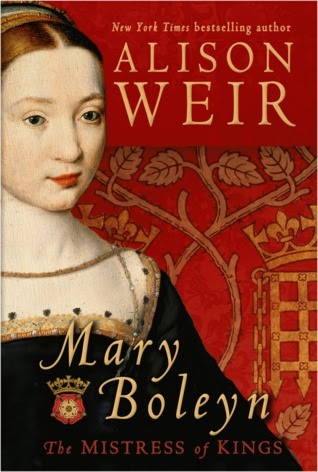
Over the last fifteen years I've read, posted, excerpted, reviewed and recommended a whole lot of books. To find these books try clicking on the tab BOOK RECOMMENDATIONS!
These images are just some of the books!




.jfif)
https://fims.historicalinfo.com/Account/Login.aspx I used this database within a genealogy library. This link may not take you to the database I used.
I tried this database to look at a town that a grandparent was raised in.
WHAT CAN YOU GET FROM A FIRE INSURANCE MAP? Detail.
I discovered the world they lived in in 1908.
I saw the streets that appear on the 1910 census. Streets they mentioned living on and also shopping on. I saw the hotels for immigrants, the brewing company, the Slavonic Church, the school funded by a robber-baron, a skating rink!, foundries, and the ethnic immigrant club, and so very many churches.
Each map starts with a LISTING of STREETS and COMPANIES.
I can imagine a salesperson negotiating insurance with each of these places.
C 2025 Ancestry Worship - Genealogy BlogSpot


