Showing posts with label Catholic. Show all posts

03 December 2024

NATIONAL ARCHIVES OF THE UNITED KINGDOM : AN IMPORTANT AND EXPANSIVE ARCHIVE BUT A BIT DIFFICULT TO NAVIGATE

NATIONAL ARCHIVES UNITED KINGDOM start page

OK I find this particular on-line catalog a bit difficult. The United States National Archives also was and in recent times was reworked to make it a tad bit easier.

So the first search I used was the word GENEALOGY. Here's where we go:

NATIONAL ARCHIVES UNITED KINGDOM WORD SEARCH GENEALOGY RESULTS
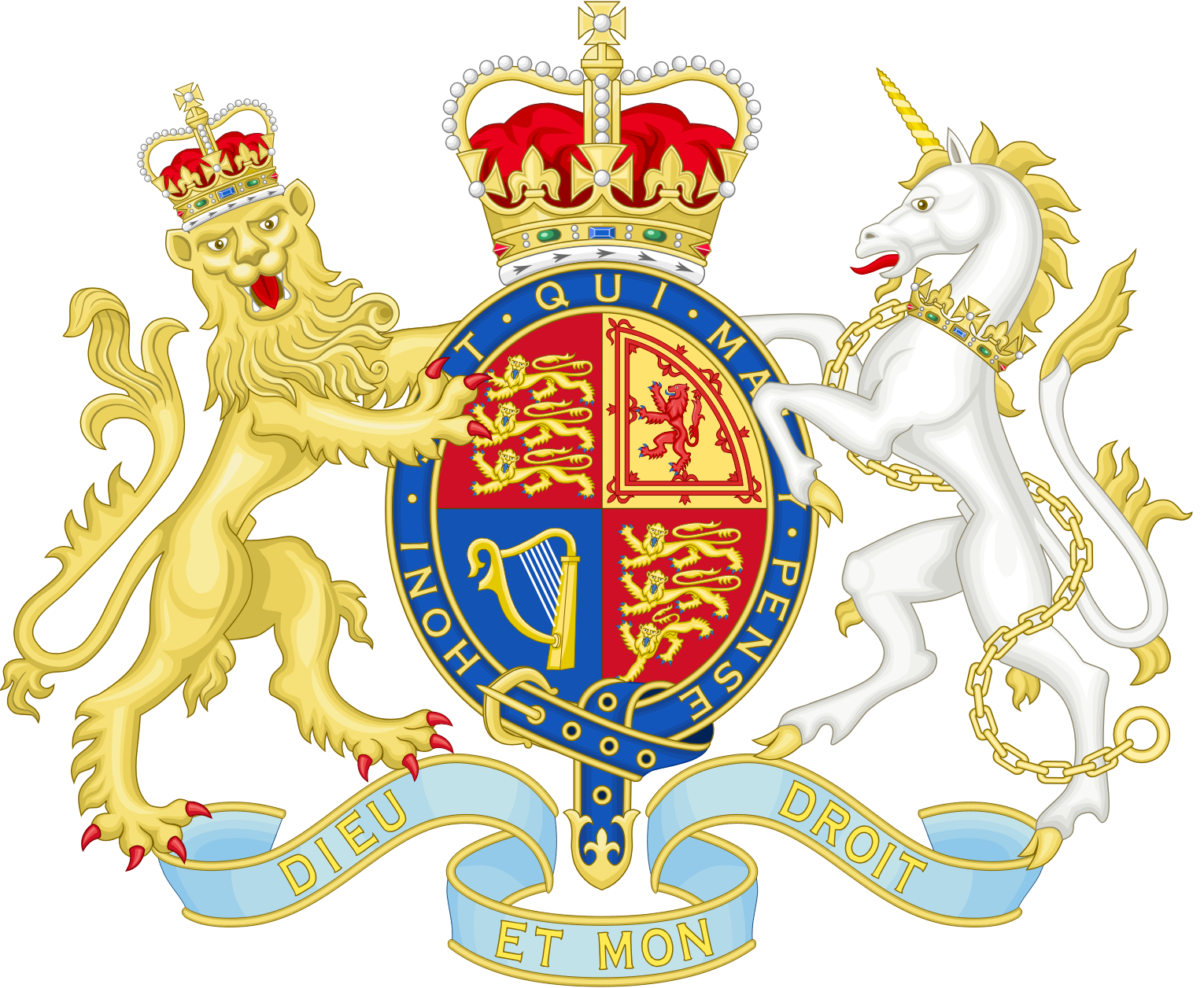
image from Wikipedia

Though some of the listings that come up still are not quite what we are looking for, we're getting there. I'm going to excerpt from the listings involving Catholics and why this is important to genealogy research:

Excerpt: 1 WHY USE THIS GUIDE?

Until 1534, England was a Catholic country. Then, after years of upheaval, the 1559 Act of Supremacy made the Protestant Church of England the established church. Following this act there was a significant increase in the number of state records created documenting Catholics’ status and activities, subject as they were to new laws, taxes and a wave of persecution. The primary focus of this guide is on those records, especially from the 16th and 17th centuries, and how to find them at The National Archives. They include:

records of penalties and punishments

details of arrests

letters from private citizens and spies sent to the authorities

reports on Catholics sent by ecclesiastical and civil authorities

baptism, marriage and burial registers

By the 18th century Catholics were no longer persecuted, but were still effectively barred from entering the professions, holding civil or military office, or inheriting land. Formal emancipation finally came in 1829 and state records relating to Catholics exists in smaller numbers from this date onwards.

Like all churches, Catholic churches kept their own records, though very few of these, in common with most local or parish church records, have found their way into The National Archives.

*** That's my italics, emphasizing that records for Catholics will still be found by finding the dioceses ...

I ENCOURAGE YOU TO GET INTO THIS CATALOG IF YOU ARE RESEARCHING ROOTS OF YOUR AMERICAN, CANADIAN, AUSTRALIAN, IRISH, WELSH, or SCOTTISH ANCESTORS!

C 2024 Ancestry Worship - Genealogy BlogSpot All Rights Reserved including Internet and International Rights

30 October 2016

DAY OF THE DEAD

Coming up November 1 and 2, celebrated in Mexico as a day in which families visit and picnic on graves, in the Catholic Church this is the time of year for praying for the souls of the departed.  Enjoy coloring or otherwise using these images for personal use and non profit blogs and such from Dover Publications.  Sign up with Dover for more information.


10 October 2016

GENEALOGY DETECTIVES ! HELP ME FIND THE RIGHTFUL OWNER - MAUREEN O'TOOLE ? - SAINT CHARLES BORROMEO CHURCH

Part of being a genealogist is having respect for other people's family' stuff. Although I will be contacting the church directly, I need some help to find Maureen O'Toole, whose parents were Ollie and Millie O' Toole,  and who lived in North Hollywood/ Valley Village and may have been members of the parish.  If these people are familiar to you, please leave me a COMMENT, along with your e-mail address (preferred) or phone number, which I will not publish on the Internet but use to contact you.


I was walking my dog early Saturday morning when I saw a spill of cards under a tree.  There was also a slippery plastic laundry type bag nearby, as if maybe someone didn't know they had lost the cards they were carrying in the bag.  This was not near a garbage bin.  I got closer and noticed that the cards and letters were not wet from the sprinklers, nor dirty or smelly, though clearly near a well used path. "It must have been recently that they were lost," I thought!  No one was around, so I decided that before they could get wet, dirty, or smelly, to take this all home, look at it, and see if I could determine the rightful owner!


The genealogy detective in me was enthralled as I saw that most of the stack were MOTHERS DAY CARDS, with Maureen's profuse love for her mom expressed in so very many handwritten notes inside.  There were envelopes without corresponding cards in them, from Rossmore, California, Sparta, New Jersey,  La Crescenta, California (the Flynns) and Hopewell, Virginia, as well as older yellowed correspondence from a male writer based in Saint Louis, which were all about theatrical events, as well as a large envelope that had once contained a will.  I noticed an envelope from Saint Charles Church and an address in No Ho, but I suspect that the O'Toole family has not lived at the address since 2005, the last postmark in the collection. 


THERE IS A 25th Anniversary card from Ollie to Millie.  From this, I know that they married on June 23, 1937 and the card is from 1962.  At the time, either Ollie or Millie's own mother was still alive as she sent a card.  Thus I believe that Ollie and Millie, who were probably born 1917 or before, have likely passed away and that the person I'm looking for is their loving daughter Maureen or a close relative, such as a grandchild, niece, or nephew.


Another clue is a Christmas card to "Aunt Millie" from Jerry, Randy, Jeffery, and Julia Rose.  Either Millie or Maureen were sometimes called "Mo."


There are some cards handmade by Maureen in the pile, an old photo of a young man. That white card below is Ollie's Silver Wedding Anniversary card to Millie and the card with the orange stone on it is a handmade Silver Wedding card from Maureen to her parents.


UPDATE OCTOBER 13th.  Progress.  A short letter has been delivered to the church.
But more amazing than that is that when I went to drop off the letter, I picked up a bulletin, and flipping through it, saw that there was a Mass being said for a Maureen O'Toole, on October 9th!  So I asked the desk clerk and confirmed she had died.  So on the Internet I found an OBIT with a picture of Maureen, and some other information.  Ollie was a character actor who had worked in cowboy films.  Maureen had an acting credit too.  And there was a funeral Mass for her on August 31st, 2016, plus mortuary information.  She had died at 73! I called the mortuary and will be sending a letter they may pass on.  Between the church and the mortuary, I feel certain that we will locate SOMEONE who may be a close family member, eventually, if they are responsive.  Besides a feeling of synchronicity that in dropping off the letter I thought to pickup and read the bulletin, this morning yet another synchronicity occurred.  I waited outside a library for it to open, and got into a conversation with a man sitting on the bench next to me.  So though this library is miles from the other locations, when I told him about being out with my dog so early that it wasn't quite light out yet, and being attracted by the envelopes, he said, "I was riding my bike and saw those a few days ago, wondered what they were, but didn't stop!"
THE COLLECTION HAS MANY CARDS TO MILLIE FROM MAUREEN,
especially Mother's Day cards, with her great love for her mom expressed in handwritten messages on large, beautiful cards.

I can just imagine Maureen shopping for the perfect card to send!


HERE IS A PICTURE OF MAUREEN 
THAT IS ON THE INTERNET ASSOCIATED WITH HER OBITS.
1939-2016


ACTOR OLLIE O'TOOLE on IMDB (the movie database)  HER DAD WAS BORN IN PITTSBURGH and he actually worked as a character actor in more films than on this list.


UPDATE!  ONE WEEK AFTER THIS POST, though the church, a connection was made.  I'll be delivering the collection to a go between any day!  So, Maureen RIP!

16 January 2016

ARTIST MAUREEN NOONAN GIFTS PARENTS OF DYING NEWBORNS PORTRAITS TO REMEMBER THEM BY

LINK TO "THE CATHOLIC KEY BLOG" here and read this wonderful, heartwarming article about the artist who gifts parents of dying newborns a portrait of their child.

CATHOLICKY.BLOGSPOT PORTRAITS OF NEWBORNS WHO ARE SICKLY  by Marty Denzer

EXCERPT: She has created about 60 portraits of infants over the past years, working from photographs forwarded to her from Alexandra’s House. The perinatal hospice provides emotional, spiritual and logistical support services for families facing a pregnancy of a child that won’t survive.

“My sister in New Jersey has a niece who lost her baby at birth,” Noonan recalled. “She wanted a portrait of the baby, and my sister sent me a photograph. That first one was very hard — a dead baby, oh, that was hard. But after a while, I got past the photo and the artist in me took over.

02 October 2014

THE GOLDEN AGE SHTETL : BOOK REVIEW by ANCESTRY WORSHIP GENEALOGY

THE GOLDEN AGE SHTETL
A New History of Jewish Life in Eastern Europe
by Yohanan Petrovsky- Shtern
Princeton University Press C 2014 and is the Publisher

BOOK REVIEW by ANCESTRY WORSHIP GENEALOGY

Yohanan Petrovsky-Shtern did a great job of bringing the long gone Eastern European shtetl to vibrant life in this new and popular book.  It's valuable to genealogy researchers in that knowing what sort of life your ancestors lived realistically may move you to the right places to look for information or go on tour.  You may also consider things like that they traveled for work from town to town or along trade routes, may have been the result of a mixed marriage or conversion to another religion, or that they became more liberal about such things as they moved to a larger town.

80% of the Jews of Eastern Europe in the 1790-1840 period that is this book's focus, lived in the three provinces covered.  (That area does not include Austrian run Galicia, but it's likely the lifestyle revealed also occurred in predominately Jewish small towns there too.)  The term shtetl is Yiddish for such a town, but as Jews moved to larger cities, the term sometimes was used with condensation.  This book reveals that when Russia took over the government, the area had a kind of Russian-Polish-Jewish, or make that Eastern Orthodox, Catholic, and Jewish, atmosphere in which much had to be negotiated.  Over time Russia began to see patriotism as membership in the Eastern Orthodox Church, and both Catholics and Jews were expected to convert or were considered suspicious.

At the same time this area was known for the magnate owned town, the magnate being a Polish aristocrat who owned the town long before Russians took over, as if it were a business but who also ran it as nobility might, with an eye to patronage.  This was a kind of town unknown to Western Europe (I know such towns existed in Slovakia and Hungary) and Russia tried to buy them out or outright take the towns from their owners.  (After the 1830 rebellion, the Russian government confiscated the Potocki estate including the whole town and 44,000 gallons of vodka.)

There is a huge portion of this book devoted to the issue of trade in this political era, when Jews were considered to be rightfully employed in trade, and that included Jewish women, and the way that a Jewish house in a shtetl often became also a place of trade, smuggling when taxations occurred, the popularity of the Tavern as a place where people from all religious backgrounds - male people - could actually unwind, the vital and lively markets that drew both sellers and buyers, and the diverse number of goods available including things like Chinese Pekoe tea, tobacco and pipes, silk, apricots, and tons of other produce.

Perhaps more interesting to me, especially as a woman and feminist, was the issue of family life and the harmonious and conflicting relationships between Jews and Catholics in these towns.  The author is Jewish and his goal was to bust through mythologies about shtetl life that have been promoted by the literary fiction called Fiddler's Roof. He emphasized how important the preservation of family was for the individual as well as the community, the emphasis on preserving family, even if that meant not reporting rape and sexual harassment or getting justice. How did the rabbi handle it when a woman who traveled for business came home pregnant?  He states that an accusation of sexual offense was enough to destroy a competitor.  And yet, he also states that (and this is where I thought "wrong, now you're peddling the Jewish version of the situation) that Jews didn't think sex was sinful and wrong LIKE THE CATHOLICS.

This is where the author lost me.  He presents all these things a Jewish woman had to do, like be "ritually pure", to have sex with her husband, and for sex to be spiritual.  She had to go soak in a mikvah bath after her period.  She actually had to go ask a Rabbi if she wasn't sure, like if she had cramps but no bleeding.  Her privates and private life were open to inspection by these authorities. (By my standards, all of this is cringeworthy!)

First I heard that for Catholics sex in marriage was considered sinful and wrong.  (It's funny I think to hear some people tell it, though not this author, that Catholics are supposed to be overpopulating the word and yet married sex is sinful and wrong!) What about the dangers of childbirth that these women faced, not having access to modern, western, standards of medical care we take for granted today? Here he says the Jewish women had more children than Catholics, less death from childbirth, and so on, taking the hygiene rather than genetic or economic factors into consideration.


He also presents a scenario where a poor Catholic servant girl is involved in lying against someone for pay, and to do that she goes by the ritual bath and claims she is pregnant by a Jewish man.  In the end she tells the truth.  The author says that this is "no surprise" and that even the girl's mother would think that two cows would be good compensation for an illegitimate birth.  Maybe that mother, but this is NOT representing Catholic values correctly.
Not then.  Not now.

Some day I will trip upon my notes from years ago so that I can say where I read this, but there came a time when the Catholic Church's influence in parts of what was Poland but now taken over by Austria or Russia was such that no Catholic girl who went to be a servant in a Jewish home could stay there more than a year.  The reason for this was that so many servant girls were turning up at the church unmarried and pregnant by their employers and there were no social services to help them.  Of course the year's time is arbitrary.

Perhaps I should just back off and state that the author chose a few real life scenarios to present things that did happen but mention that news is the exceptional not the common.
I took lots of notes before returning this book to the library, and hope to read it again in the future.

05 April 2014

HOLA MAGAZINE and SPANISH ROYALTY AND ARISTOCRATS : AMERICAN CITIZENS GIVE UP RIGHTS TO ARMS !

I had an interesting conversation with a friend of mine who comes from Costa Rica, and is of a heritage that would be considered "Mixed" ; Spanish, German, Chinese, Native American.  We were talking about Hola Magazine, which I look through when I'm at certain libraries that subscribe to it, and which seems to me to be very focused on Spanish Royalty and Aristocrats.  Of course this makes perfect sense since it is a magazine that covers the Spanish world, the country and culture that brought Europeans to the New World of Central and South America.  This is also THE CATHOLIC WORLD.

American History and genealogy tends to be very oriented towards England - Great Britain - and the Protestant.  It's almost as if the French and Spanish were never here, as if they had no influence, though of course they did.  You have to live in California to learn about the Spanish in these parts, and even tour guides at some of the Missions have an anti-Catholic bias.

My friend holds the snobby people of Costa Rica who claim to only be "Spanish" in contempt.  He thinks in reality everyone is "Mixed."  (I think DNA is proving that!)

I was telling him that sales of products with family crests are strong in the United States, even though WHEN A PERSON BECOMES AN AMERICAN CITIZEN THEY GIVE UP ALL RIGHTS TO TITLES, CRESTS, and all that.   But does it hurt to wear your tartan for fun?  Of course not!

The European systems of inheriting titles and regalia was generally very focused on these going between father and first son.  Daughters had to marry someone else with a title to have one and in some countries if a daughter married a commoner she lost her birth status.  Second sons almost fled to the Virginia Colony to have a chance.  Second and subsequent sons, looking for an opportunity they wouldn't inherit, had to become self made.  Many of them joined armies.  Some of them became Knights through military or other service to the Crown and thus earned their own titles to use and pass on.

In Germany, it was the youngest son who stayed with the parents and eventually earned the family farm.   In Hungary only men of the upper classes could vote, though higher class didn't necessarily mean the family was also rich.

This emphasis and preference for sons and first sons seems sexist to (most of) us now in the West but is still the way in so many countries, India, China, the Middle East.  Women even get ultrasounds to detect female fetus and have them aborted to begin their families with a male.

So family history research is always also HISTORICAL and CULTURAL research!